

By Nadia Steinle.
Between early classes, long study sessions, workouts, meetings, and everything else packed into a college schedule, eating balanced meals can sometimes feel like another item on the to-do list. Fortunately, adding more protein to your day does not have to be complicated.
Protein is often associated with building muscle, but its benefits go beyond the gym. It supports recovery and helps meals feel more satisfying. Whether you are heading to a workout or trying to get through back-to-back classes, having convenient protein options can help you build meals that work for your day.
Protein Does More Than Build Muscle
Protein provides amino acids that help build and repair tissues, produce enzymes and hormones, support immunity, and maintain lean body mass. These amino acids also support muscle protein synthesis (MPS), the ongoing process of repairing and building muscle proteins.[1]
Protein-rich meals and snacks may increase fullness and reduce hunger, helping students stay satisfied between meals.[2,3] Although total daily intake matters most, including protein at breakfast, lunch, dinner, and snacks can make it easier to meet your needs consistently and may support MPS throughout the day.[4]
Protein and Training: A Strong Partnership
Resistance training challenges muscles, while protein supplies the amino acids needed for recovery and adaptation. The Recommended Dietary Allowance for adults is 0.8 grams per kilogram of body weight per day, but people who exercise regularly may benefit from approximately 1.4–2.0 grams per kilogram, depending on their training and goals.[5]
Higher protein intake can support lean body mass, especially when paired with resistance training, but more is not always better. Adequate energy, balanced nutrition, sleep, and recovery also matter.[6] There is no need to drink a protein shake immediately after exercising. Eating a quality protein source reasonably close to your workout and meeting your needs throughout the day is a practical approach.[5]
Plant-Based Protein Counts, Too
You do not need to eat meat to get protein. Beans, lentils, tofu, tempeh, edamame, nuts, seeds, and nut butters can all contribute to your daily intake.[7] A well-planned vegetarian or vegan eating pattern can provide enough protein and essential amino acids.[8]
If you want to add more plant-based options, start with foods you already enjoy. Add beans or tofu to a bowl, pair hummus with pita, keep roasted chickpeas in your backpack, or choose edamame as a snack. Eating a variety of protein-containing foods across the day is a simple way to build a balanced routine.[7,8]
From the Gym to the Classroom
Carbohydrates provide important energy, while pairing them with protein, healthy fats, or fiber can make meals and snacks more satisfying. Try an apple with peanut butter, crackers with tuna or cheese, or Greek yogurt with granola and berries.
Research suggests that eating breakfast may support attention and cognitive performance, although findings vary across studies.[9,10] One study found that a protein-rich breakfast increased fullness and improved one measure of concentration in young women with overweight or obesity.[11] These findings do not apply equally to everyone, but they offer a practical idea: choose a breakfast that leaves you satisfied and ready for the morning.
Build a Better Snack
A helpful snack combines protein with a carbohydrate, fiber, or healthy fat. Keep two or three reliable options available so you do not have to make a new decision every time hunger hits.
Try Greek yogurt with fruit or granola, cottage cheese, hard-boiled eggs, edamame, jerky, a protein shake or bar, nut butter with fruit, turkey roll-ups, tuna with crackers, or trail mix with nuts and roasted chickpeas. A few options in your dorm, backpack, or refrigerator can make busy days easier.
Where to Find Protein Around Campus
You do not have to prepare every snack yourself. Campus dining locations can help you find options between classes.
The Commons
The Malkin Sacks Commons Dining Room is a useful stop when you have time for a complete meal. Look for options such as eggs, beans, yogurt, or a grilled protein, and add a carbohydrate, fruit, and vegetable when available. If you have an unlimited meal plan, you can also stop in for a smaller snack, such as yogurt and fruit or another protein option available that day.


Quick Eats
When you are short on time, check the grab-and-go selections for options such as yogurt, eggs, cheese, sandwiches, protein bars, or packaged snacks. Pairing two smaller items can make a more satisfying snack.


Shake Smart
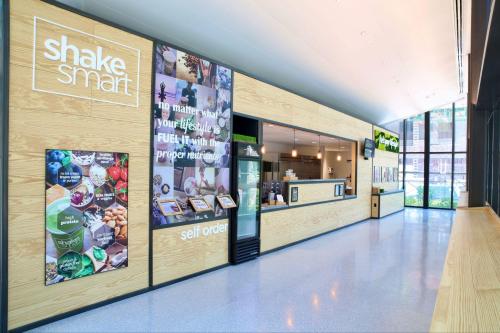
Located under River Hall in The Village, Shake Smart offers smoothies, wraps, shakes, and bowls that can make protein convenient. Consider the serving size and add-ins when choosing what fits your day.

Wildflower Kitchen
At Wildflower Kitchen in the LBC Food Court, look for bowls, toasts, or salads with a protein source, including a plant-based choice when available. Add a carbohydrate, vegetables, and a dressing you enjoy for a satisfying lunch.


Surfing Pelican
Surfing Pelican campus market is another place to look for grab-and-go entrées, snacks, and drinks. Choose a protein source and pair it with fruit, crackers, or another carbohydrate for energy.


Your Protein Plan Does Not Have to Be Perfect
Protein is for more than workouts. It supports the tissues and everyday processes that help your body function. Animal and plant-based foods can both help you meet your needs, and there is room to choose what you enjoy.
Start small: pick two or three protein-rich snacks you genuinely like and identify one or two campus locations where you can find them. Building those options into your routine can make eating enough protein feel less like another assignment.
Need Help Finding What Works for You?
Have questions about protein, balanced meals, or fueling your workouts? Reach out to Tulane’s campus nutritionist for guidance on building an eating routine that fits your schedule, preferences, and goals. Email cgertler@tulane.edu or make an appointment through Tulane Nutrition Services.
References
- Brook MS. Investigating muscle protein synthesis using deuterium oxide: The impact of dietary protein interventions across the lifespan. Experimental Physiology. 2025;110(7):949–960. https://doi.org/10.1113/EP092016
- Paddon-Jones D, Westman E, Mattes RD, Wolfe RR, Astrup A, Westerterp-Plantenga M. Protein, weight management, and satiety. The American Journal of Clinical Nutrition. 2008;87(5):1558S–1561S. https://doi.org/10.1093/ajcn/87.5.1558S
- Leidy HJ, Clifton PM, Astrup A, et al. The role of protein in weight loss and maintenance. The American Journal of Clinical Nutrition. 2015;101(6):1320S–1329S. https://doi.org/10.3945/ajcn.114.084038
- Mamerow MM, Mettler JA, English KL, et al. Dietary protein distribution positively influences 24-hour muscle protein synthesis in healthy adults. The Journal of Nutrition. 2014;144(6):876–880. https://doi.org/10.3945/jn.113.185280
- Jäger R, Kerksick CM, Campbell BI, et al. International Society of Sports Nutrition position stand: Protein and exercise. Journal of the International Society of Sports Nutrition. 2017;14:20. https://doi.org/10.1186/s12970-017-0177-8
- Morton RW, Murphy KT, McKellar SR, et al. A systematic review, meta-analysis, and meta-regression of the effect of protein supplementation on resistance training-induced gains in muscle mass and strength in healthy adults. British Journal of Sports Medicine. 2018;52(6):376–384. https://doi.org/10.1136/bjsports-2017-097608
- U.S. Department of Agriculture. Protein Foods Group. MyPlate. https://www.myplate.gov/web/web/eat-healthy/protein-foods
- Mariotti F, Gardner CD. Dietary protein and amino acids in vegetarian diets: A review. Nutrients. 2019;11(11):2661. https://doi.org/10.3390/nu11112661
- Sámano R, Hernández-Chávez C, Chico-Barba G, et al. Breakfast nutritional quality and cognitive interference in university students from Mexico City. International Journal of Environmental Research and Public Health. 2019;16(15):2671. https://doi.org/10.3390/ijerph16152671
- Abdullah M, Khurram K, Asim A, et al. Impact of breakfast consumption and sleep habits on morning attention and concentration among health professional students. Cureus. 2024;16(9). https://doi.org/10.7759/cureus.69592
- Dalgaard LB, Kruse DZ, Norup K, Andersen BV, Hansen M. A dairy-based, protein-rich breakfast enhances satiety and cognitive concentration before lunch in young females with overweight to obesity: A randomized controlled crossover study. Journal of Dairy Science. 2024;107(5). https://doi.org/10.3168/jds.2023-24152